.webp&w=128&q=75&dpl=dpl_ESWUzB66CP1pyDk1JVxAD2iTjLkB)
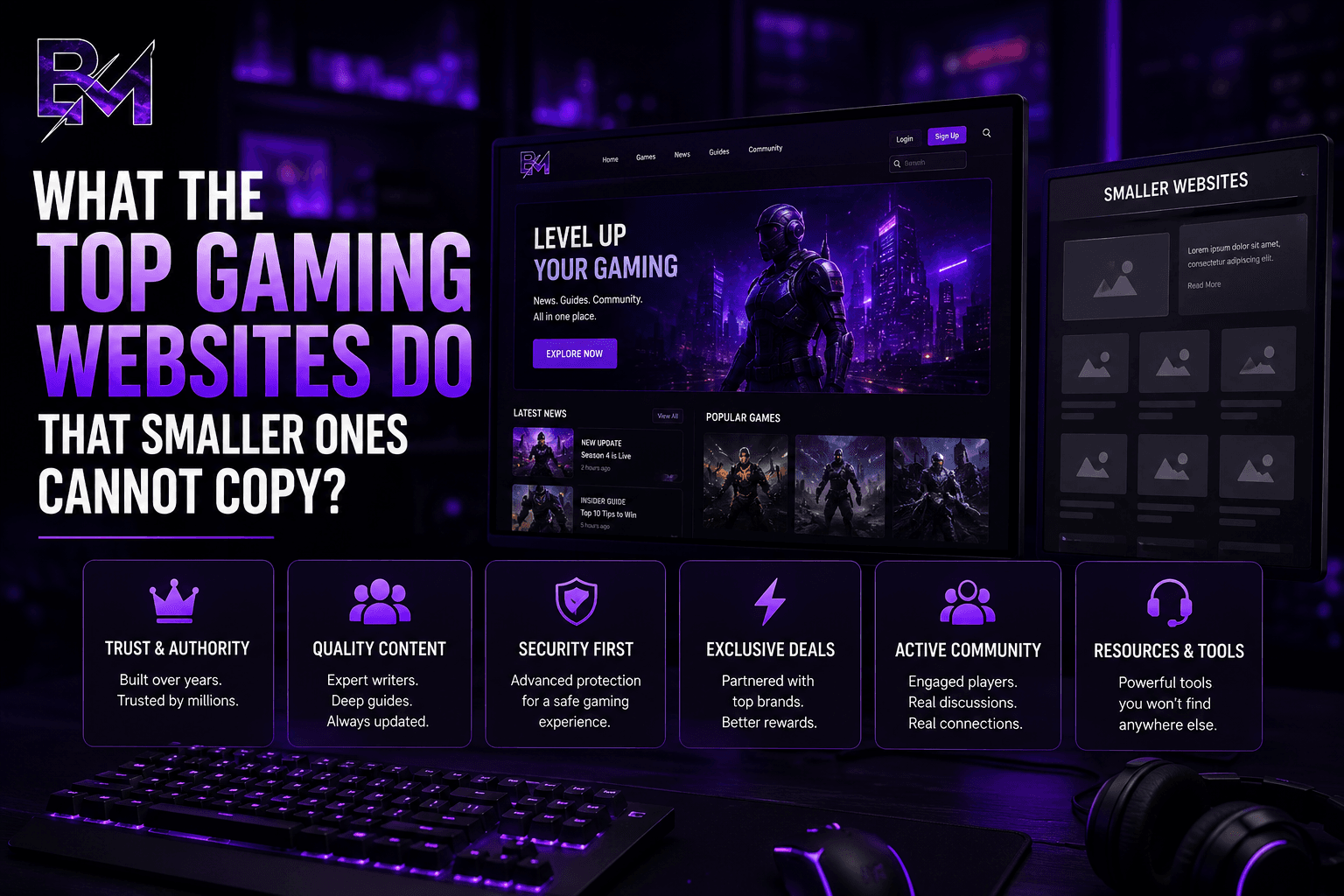
What the Top Gaming Websites Do That Smaller Ones Cannot Copy?
The biggest gaming websites in 2026 did not get to where they are overnight. They built their positions over the years through decisions that compounded over time and created advantages that smaller platforms genuinely struggle to replicate. A proper gaming website success factors analysis reveals that the gap between the top platforms and smaller competitors is not simply about having more money to spend. It is about the habits, systems, and trust that large platforms have built up over time and that cannot be purchased or rushed regardless of how much a newer platform invests.
Infrastructure That Handles Real Scale
The first thing that separates top gaming websites from smaller ones is the infrastructure underneath them. Large platforms serve millions of users simultaneously and their systems are built to handle that load without performance degrading for anyone. This is not something a smaller platform can easily replicate. Building and maintaining infrastructure at that scale requires significant ongoing investment and years of refinement based on real traffic data.
Smaller online gaming platform providers often perform well under normal conditions and start to show weaknesses when traffic spikes. Peak hours, popular game launches, and seasonal surges in usage expose gaps that are invisible during quieter periods. Top platforms have solved these problems through experience and investment. Smaller ones are often still working through them.
Trust Built Over Years of Consistent Delivery
Trust is one of the clearest answers to why big gaming sites beat smaller competitors and it is also one of the hardest things to replicate quickly. Players who have used a platform for years and consistently had positive experiences develop a level of confidence in that platform that a newer competitor cannot manufacture.
This trust shows up in small ways during every session. A player on a trusted platform does not hesitate before clicking on a new game. They do not wonder whether the platform will work properly today. They just play. That confidence is the result of hundreds of positive sessions accumulated over time and it creates a loyalty that advertising alone cannot buy.
Smaller platforms are not untrustworthy by default. Many deliver excellent experiences. But they have not yet had the time to build the kind of track record that turns a regular visitor into a player who would not seriously consider going elsewhere.
Gaming Website Success Factors Analysis: What the Data Shows?
When you look at what separates successful gaming platforms from ones that plateau early, a few factors come up consistently across the gaming website success factors analysis.
Content volume and quality is the first. Top platforms have larger game libraries built over years of partnerships with developers and in-house development. The variety and quality of what they offer gives players more reasons to stay and more reasons to return. Smaller platforms with limited libraries run out of new things to offer their audience faster and struggle to keep players engaged over long periods.
Brand recognition is the second. Players searching for somewhere to play online are more likely to click on a name they recognise than one they have never seen. Top platforms benefit from years of organic mentions, reviews, and word of mouth that have made their names familiar. This recognition drives traffic without requiring ongoing advertising spend in the same way that newer platforms need.
Data and personalisation is the third. Large platforms have years of user behaviour data that they use to improve the experience continuously. They know which games keep players engaged longest, which features drive return visits, and where players tend to drop off. Smaller online gaming platform providers are working with far less data and their ability to make informed improvements is limited by that gap.
Why Big Gaming Sites Beat Smaller Competitors on Mobile?
Mobile performance is one of the clearest areas where the gap between large and small platforms shows up. Top gaming websites have dedicated mobile development teams and years of optimisation behind their mobile experiences. The result is an experience that feels natural on any phone, loads quickly on any network, and performs consistently regardless of the device being used.
Smaller platforms often have mobile experiences that were built as an adaptation of their desktop version rather than designed for mobile from the ground up. Players notice this immediately. Buttons that are slightly too small to tap accurately, layouts that do not quite fit the screen, and load times that are noticeably slower on mobile networks are all signs of a mobile experience that was treated as secondary rather than essential.
This matters enormously for retention. A player who tries a platform on mobile and finds the experience frustrating is unlikely to come back regardless of how good the desktop version is.
What Smaller Platforms Can Actually Compete On?
This is where the analysis gets more interesting. While smaller online gaming platform providers cannot easily replicate the infrastructure, trust, or data advantages of the biggest platforms, there are areas where they can genuinely compete and sometimes win.
Focus is one of them. A smaller platform that does one thing really well can deliver a more satisfying experience in that specific area than a large platform spreading its attention across dozens of categories. Players who care deeply about a particular type of game often prefer a focused platform over a generalist one.
Speed of improvement is another. Smaller platforms can make changes and improvements faster than large ones. A large platform with millions of users has to move carefully when changing anything because the risk of disrupting a large audience is significant. A smaller platform can respond to player feedback and implement changes within days rather than months.
Big Money Gaming sits in this space well. The platform focuses on delivering a clean, consistent, and genuinely enjoyable free sweepstakes gaming experience rather than trying to compete with everything the largest platforms offer. That focus creates a quality of experience in its specific area that players who find it tend to appreciate and return to regularly.
Conclusion
The gaming website success factors analysis makes one thing clear. The advantages that top gaming websites hold over smaller competitors are real but they are not insurmountable for platforms that find the right focus. Why big gaming sites beat smaller competitors comes down to infrastructure, trust, content volume, and data built up over years of consistent delivery. Smaller platforms cannot copy those advantages directly but they can build genuine value through focus, speed, and quality in specific areas. Big Money Gaming takes that approach. A free online gaming platform built around doing its specific thing well rather than competing across every dimension at once. For players looking for a platform that delivers consistent quality within a focused experience, that approach produces something worth spending real time on.
FAQ's:
What does a gaming website success factors analysis reveal?
It shows that the biggest gaming platforms succeed through a combination of infrastructure scale, years of trust building, large content libraries, brand recognition, and data driven improvements. These advantages compound over time and become increasingly difficult for newer platforms to close the gap on.
Why do big gaming sites beat smaller competitors consistently?
Large platforms benefit from infrastructure built for scale, trust developed over years of consistent delivery, and data that allows continuous improvement. Smaller platforms are often still building these foundations and the gap shows up most clearly during high traffic periods and on mobile.
What are online gaming platform providers and how do they differ?
Online gaming platform providers range from large established platforms with millions of users to smaller focused platforms serving specific audiences. The differences lie in infrastructure capacity, game library size, mobile optimisation, and the depth of trust built with their player base.
Can smaller gaming platforms compete with larger ones?
Yes in specific areas. Smaller platforms can compete through focus, faster response to player feedback, and delivering a high quality experience within a defined category. They cannot easily compete on infrastructure scale or brand recognition but they do not always need to.
What makes Big Money Gaming worth using despite being smaller than the biggest platforms?
Big Money Gaming focuses on delivering a clean, consistent, and free sweepstakes gaming experience rather than trying to compete across every area. That focus produces a quality of experience within its specific space that players who find it tend to return to regularly.
How important is mobile performance in gaming website success?
Extremely important. Mobile accounts for the majority of casual gaming sessions in 2026. Platforms that have not invested properly in their mobile experience lose a significant portion of their potential audience before those players ever become regular users.